
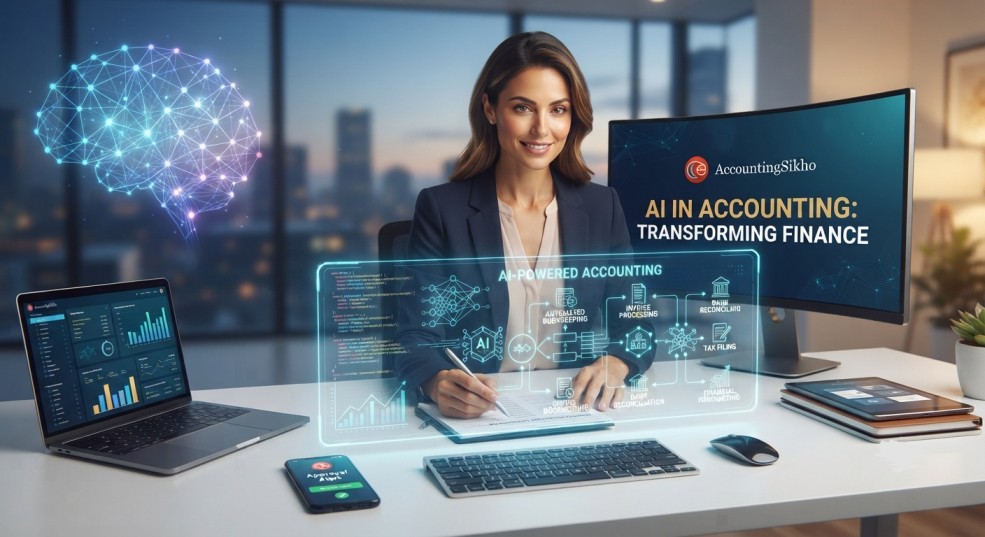
The financial landscape is shifting at a remarkable pace. For decades, traditional bookkeeping and accounting relied heavily on manual data entry, endless spreadsheets, and tedious reconciliations prone to human error. Today, modern business owners and financial professionals are actively searching for smarter solutions to streamline their operations.
Enter AI in accounting and automated bookkeeping—a technological evolution that is completely redefining how businesses handle their finances. Whether you are a small business owner trying to stay on top of daily expenses or a growing firm scaling your advisory services, embracing these innovations is no longer optional; it is essential for staying competitive.
At AccountingSikho, we believe that understanding these advanced tools empowers you to make better financial decisions, minimize costly mistakes, and reclaim valuable time to focus on strategic growth.
The Shift from Manual Ledgers to Smart Automation
Traditional accounting has long been characterized by late nights spent matching receipts, typing invoice numbers into desktop software, and double-checking columns for discrepancies. While these methods kept businesses running in the past, they are increasingly inefficient in today’s fast-paced digital economy.
Manual processes consume hundreds of hours annually, diverting attention away from core business strategies. Furthermore, human fatigue frequently leads to miscalculations, missed deductions, and costly compliance errors during tax season.
Automated bookkeeping bridges this gap by leveraging machine learning algorithms and optical character recognition (OCR) to capture, categorize, and reconcile financial data instantly. Instead of spending hours chasing paperwork, professionals can now rely on intelligent systems that process information with near-perfect accuracy.
Core Ways AI is Revolutionizing Financial Management
Artificial intelligence is not just a buzzword; it is a practical suite of tools that fundamentally changes everyday workflows. Here are the primary ways AI in accounting and automated bookkeeping are optimizing modern finance:
1. Automated Data Capture and Receipt Scanning
Gone are the days of manually sorting through shoe boxes full of paper receipts. Modern AI-driven applications can scan paper documents, digital invoices, and email attachments in seconds. The software automatically extracts crucial details—such as vendor names, dates, tax amounts, and totals—and logs them directly into the correct ledger accounts without human intervention.
2. Real-Time Bank Reconciliations
Reconciling bank accounts used to be a tedious end-of-month chore. Intelligent algorithms now continuously monitor bank feeds, matching transactions against recorded invoices and expenses in real-time. If an anomaly or duplicate payment occurs, the system flags it immediately for review, ensuring your financial records remain accurate and up-to-date.
3. Predictive Cash Flow Forecasting
Understanding where your business stands financially tomorrow is just as important as knowing where it stands today. Advanced machine learning models analyze historical revenue, spending habits, seasonality, and outstanding invoices to forecast future cash flow with incredible precision. This allows business owners to anticipate cash crunches, plan investments, and manage working capital proactively.
4. Fraud Detection and Risk Mitigation
Financial security is a top priority for any organization. AI systems establish baseline spending behaviors for a business and continuously monitor transactions for unusual patterns. Whether it is an unauthorized purchase, duplicate invoicing, or suspicious vendor activity, automated alerts notify management instantly, drastically reducing internal and external fraud risks.
Why Businesses and Professionals Are Embracing These Tools
The adoption of smart financial technologies offers undeniable advantages for both growing companies and established accounting practices.
Unmatched Efficiency: Automating repetitive data entry tasks saves countless hours each week, allowing teams to redirect their energy toward higher-value activities.
Superior Accuracy: Minimizing human touchpoints in routine tasks drastically reduces transcription errors, compliance penalties, and audit risks.
Strategic Advisory Value: When software handles the math, accountants can transition from number-crunching bookkeepers into trusted strategic advisors, helping clients interpret data and plan for future growth.
Cost Savings: Reducing the time spent on manual administration directly translates into lower operational costs and better resource allocation.
At AccountingSikho, we emphasize that technology is designed to empower professionals, not replace them. By combining human expertise with cutting-edge software, businesses unlock unprecedented levels of financial clarity.
Overcoming Challenges in Implementation
While the benefits are clear, transitioning to automated systems requires careful planning. Organizations often face a few common hurdles during adoption:
Resistance to Change: Employees accustomed to legacy spreadsheets may feel intimidated by new software. Comprehensive training and clear communication regarding the benefits are crucial for smooth onboarding.
Data Security Concerns: Moving financial data to cloud-based AI platforms requires strict adherence to cybersecurity standards. Choosing reputable, encrypted software providers safeguards sensitive information against breaches.
Integration Hurdles: Ensuring that new automation tools integrate seamlessly with existing enterprise resource planning (ERP) or customer relationship management (CRM) systems requires technical foresight.
Addressing these challenges head-on ensures a seamless transition and maximizes return on investment.
Frequently Asked Questions
Will AI replace human accountants and bookkeepers?
No. While AI excels at repetitive, rules-based tasks like data entry and transaction categorization, it lacks human intuition, emotional intelligence, and strategic judgment. Professionals leverage AI in accounting and automated bookkeeping to handle routine workloads, freeing up time to focus on complex tax planning, financial analysis, and personalized client consulting.
Is cloud-based automated bookkeeping secure?
Yes, reputable automated accounting platforms utilize enterprise-grade encryption, multi-factor authentication, and secure cloud infrastructure that often exceeds the security measures of local office computers.
How can small business owners get started with financial automation?
Getting started begins with auditing your current workflows to identify bottlenecks. Transitioning to modern cloud accounting software that offers built-in receipt scanning, bank feeds, and automated invoicing is an effective first step. Educational platforms like AccountingSikho offer valuable resources, guides, and insights to help you navigate this digital transformation seamlessly.
Conclusion
The integration of advanced technology into financial operations marks a monumental leap forward for modern commerce. Embracing AI in accounting and automated bookkeeping allows organizations to eliminate manual inefficiencies, safeguard against costly errors, and gain deep, real-time insights into their financial health.
As the industry continues to evolve, staying informed and adaptable is the key to long-term success. Explore more expert tips, tutorials, and industry guides right here at AccountingSikho to master the future of finance and elevate your business to new heights.